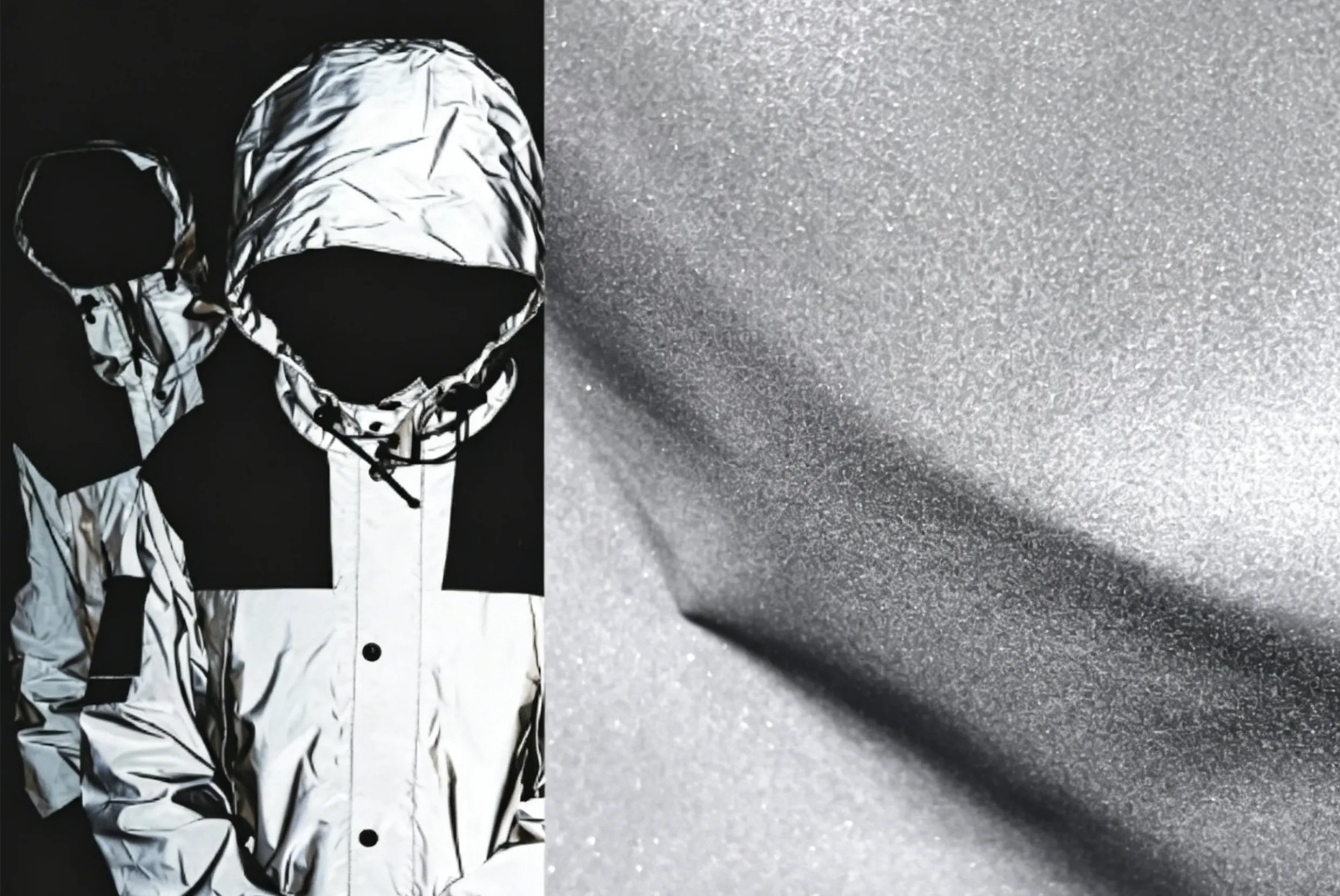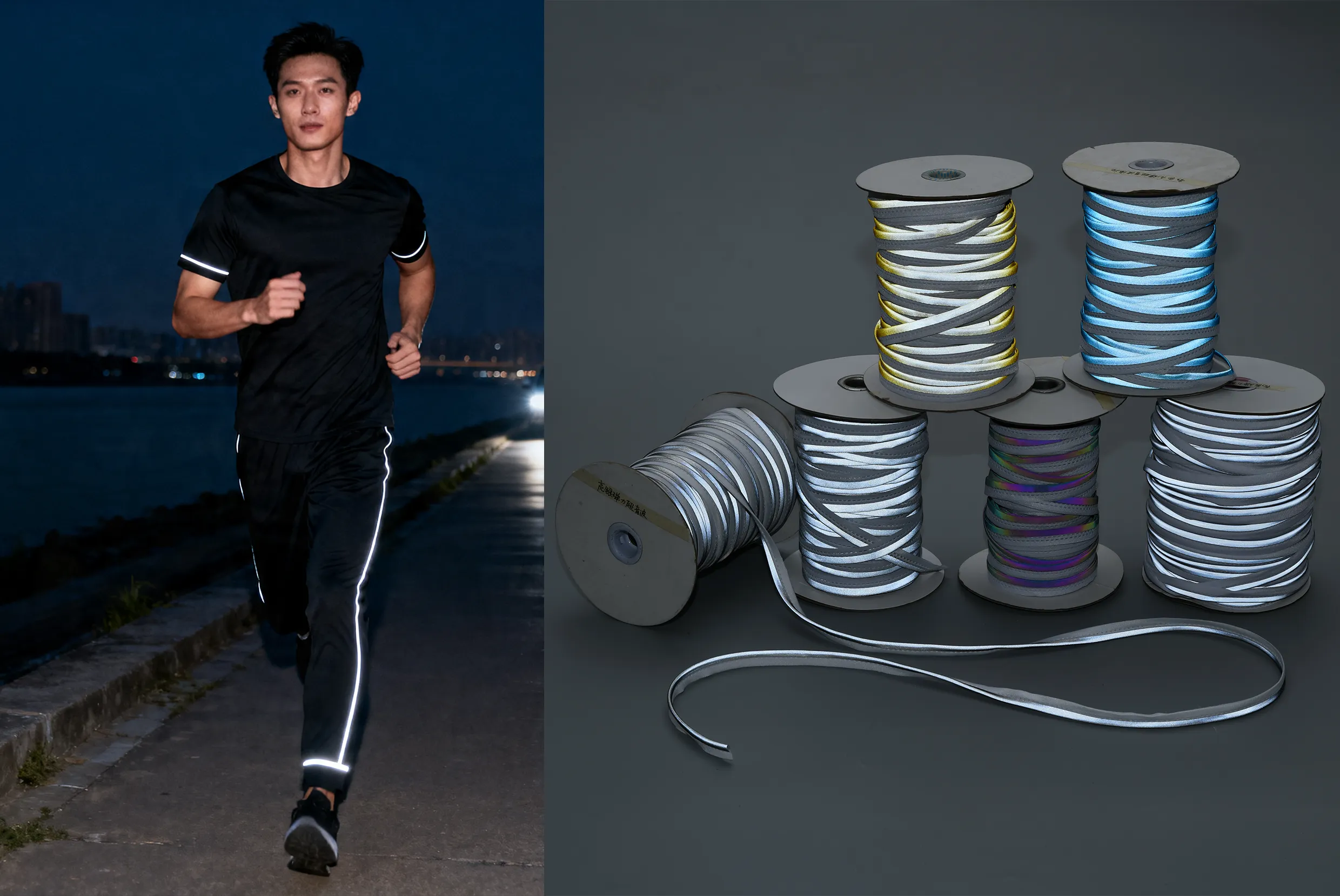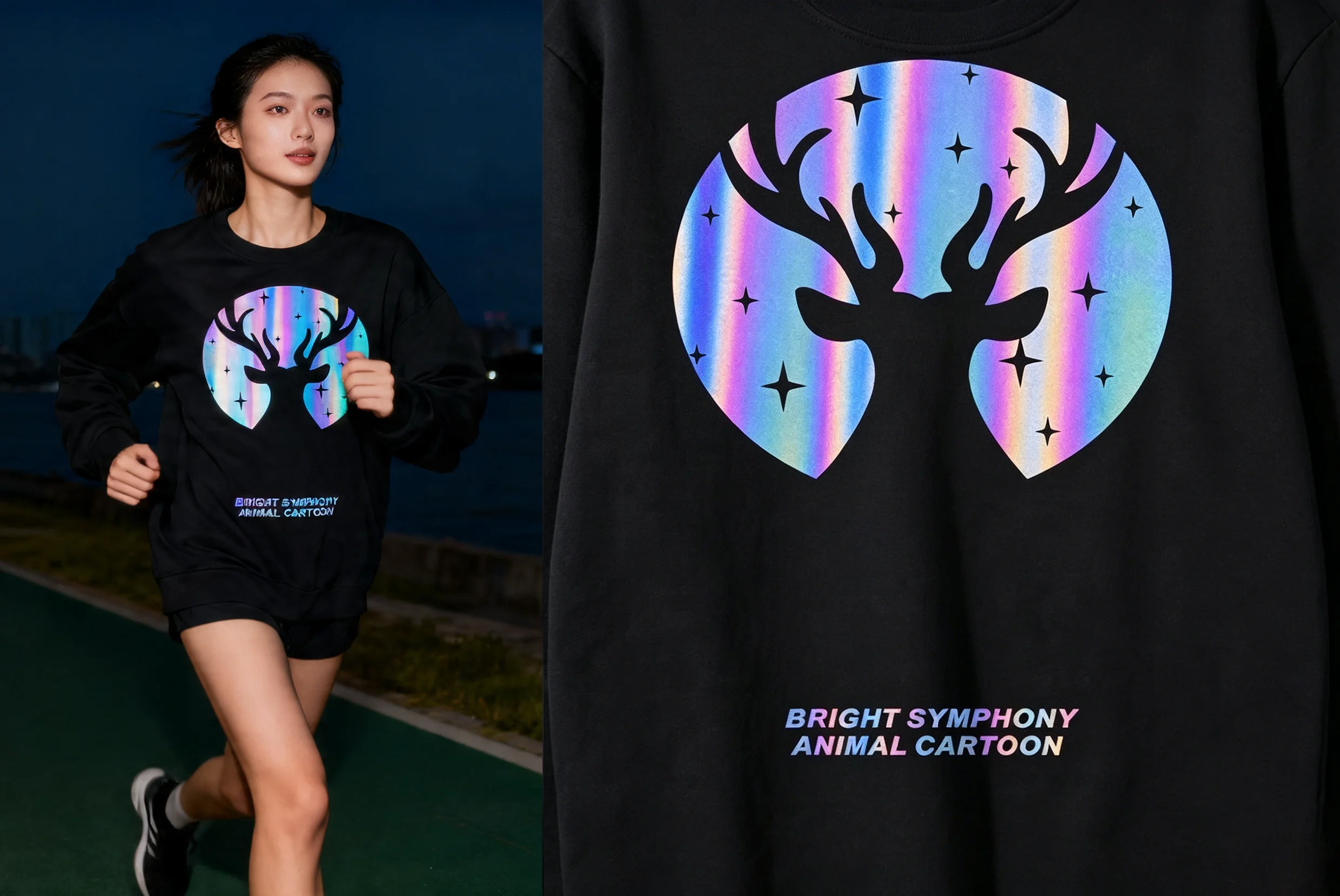
Selecting the ideal reflective heat transfer involves balancing retro-reflectivity intensity, fabric elasticity, and wash durability (standard vs. industrial). For modern activewear and safety uniforms, utilizing segmented heat transfer films or stretch-grade silver films ensures maximum visibility without compromising garment breathability or flexibility.
Quick Comparison: Reflective Heat Transfer Types
| Transfer Type | Best Application | Key Technical Benefit |
| Silver Reflective Film | Safety Vests & Workwear | Maximum (Ra) value (>400) and high visibility. |
| Segmented (Breathable) | Performance Sportswear | Enhanced airflow and superior fabric flexibility. |
| Stretch Reflective Film | Spandex, Yoga, & Leggings | Prevents cracking or peeling during fabric expansion. |
| Rainbow / Iridescent | Fashion & Lifestyle Brands | Unique aesthetic appeal with multi-color reflection. |
1. What Are Reflective Heat Transfers and Why Are They Trending?
Reflective heat transfers (also known as Reflective HTV or Heat Transfer Films) are specialized vinyl-like materials that are heat-pressed onto garments. Unlike traditional sewn-on tapes, heat transfers provide a seamless, lightweight finish that reduces friction against the skin. This makes them the preferred choice for the modern “athleisure” market and high-end safety apparel where comfort is as critical as visibility.
2. Matching the Film to Your Fabric: The Adhesion Factor
The most common mistake in sourcing is using the wrong adhesive backing for the base fabric.
- Standard Polyester/Cotton: Works best with universal PU-based reflective films.
- High-Stretch Fabrics (Lycra/Spandex): Requires High-Elasticity Reflective Film. If the film doesn’t stretch at the same rate as the fabric, it will delaminate or “ghost” after just a few wears.
- Water-Repellent Coatings: Fabrics treated with DWR (Durable Water Repellent) often require a specialized “Hard-to-Stick” adhesive to ensure a permanent bond.
3. Key Performance Indicators: Brightness and Wash Cycles
Retro-reflectivity (Ra): Professional-grade silver transfers must meet ANSI/ISEA 107 or EN ISO 20471 standards, typically requiring an initial (Ra) of >330cd(lx·m²).
Laundering Durability: Standard films are rated for 25 cycles at 60℃. For industrial-grade uniforms, look for films certified for 50+ cycles, ensuring the reflective glass beads remain embedded in the polymer layer even after repeated agitation.