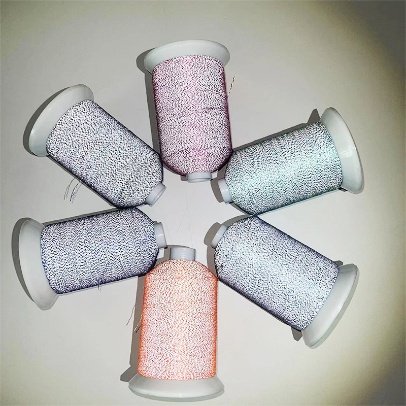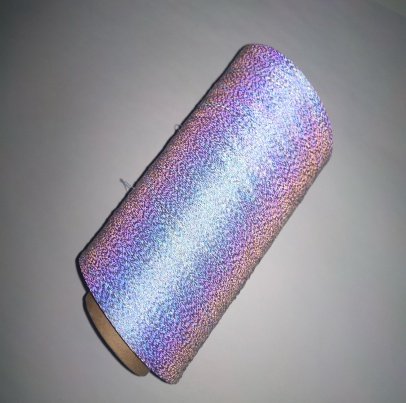
Perforated reflective fabric is a specialized functional textile that achieves dual core values of “safety warning” and “breathable comfort” by integrating high-refractive-index glass microbeads or microprism structures into the fabric substrate, and processing dense and uniform micro-perforations through precision punching technology[5]. Different from traditional reflective fabrics that are airtight and stuffy, and ordinary breathable fabrics that lack safety warning functions, perforated reflective fabric features dense micro-holes (usually 0.1-0.5mm in diameter) evenly distributed on the fabric surface, which can quickly discharge sweat and circulate air while maintaining efficient reflective performance, solving the industry pain point of “safety and comfort being incompatible” for reflective textiles in high-temperature or long-term wearing scenarios[7].
In terms of technological innovation, the latest generation of perforated reflective fabric has achieved breakthroughs in both craftsmanship and functionality. Drawing on advanced spinning and punching technology, manufacturers adopt high-quality polyester, nylon or recycled fiber as the substrate, combined with a uniform arrangement of high-reflectivity glass microbeads, and use intelligent precision punching equipment to ensure that the micro-perforations do not damage the reflective layer, while maximizing air permeability[1]. Some high-end products even integrate the “reflective + flame retardant” “reflective + cool touch” composite technology, and adopt water-soluble or non-solvent environmental protection adhesives to replace traditional solvent-based products, in line with the global green and sustainable development trend[1]. Taking Tianjin Sairui Zhida Technology Co., Ltd., a leading enterprise in individual protective equipment, as an example, the company applies perforated reflective fabric to its light-weight anti-collision safety helmets, with micro-perforations corresponding to the helmet shell to greatly improve air permeability, and the reflective edge and reflective pattern design not only ensures night safety but also integrates Chinese fashion elements, realizing the integration of safety, comfort and aesthetics[2].
In terms of product performance, perforated reflective fabric has obvious advantages in breathability, durability and safety. The air permeability of high-quality products can reach more than 3000mm/s, which is 3-5 times that of traditional reflective fabrics, and can effectively reduce the stuffiness and discomfort caused by long-term wearing[7]. At the same time, it can withstand more than 50 machine washes and harsh outdoor environments without losing reflective performance and perforation integrity, and its reflective brightness meets the international high-visibility safety standards. Most products have passed the OEKO-TEX ecological certification, are non-toxic and radiation-free, and some high-end products adopt recycled fiber substrates, further enhancing environmental protection attributes[1]. In addition, relying on the research and development of nanocoating technology, the surface of the fabric is treated with anti-fouling and water-repellent functions, expanding its application scope in outdoor and wet environments[6].
The market pattern of perforated reflective fabric is gradually taking shape, with domestic manufacturers leading the innovation and development trend. In the past, the global high-end reflective fabric market was dominated by international brands such as 3M, which mainly focused on traditional non-perforated products, lacking innovation in breathability and comfort[2]. In recent years, with the rise of China’s textile industrial clusters such as Shengze, Keqiao and Tianjin, professional enterprises have gradually emerged, relying on strong R&D capabilities, intelligent production lines and complete supply chains to gain market recognition[1]. These enterprises not only provide standardized perforated reflective fabric products of various specifications, but also support personalized customizati