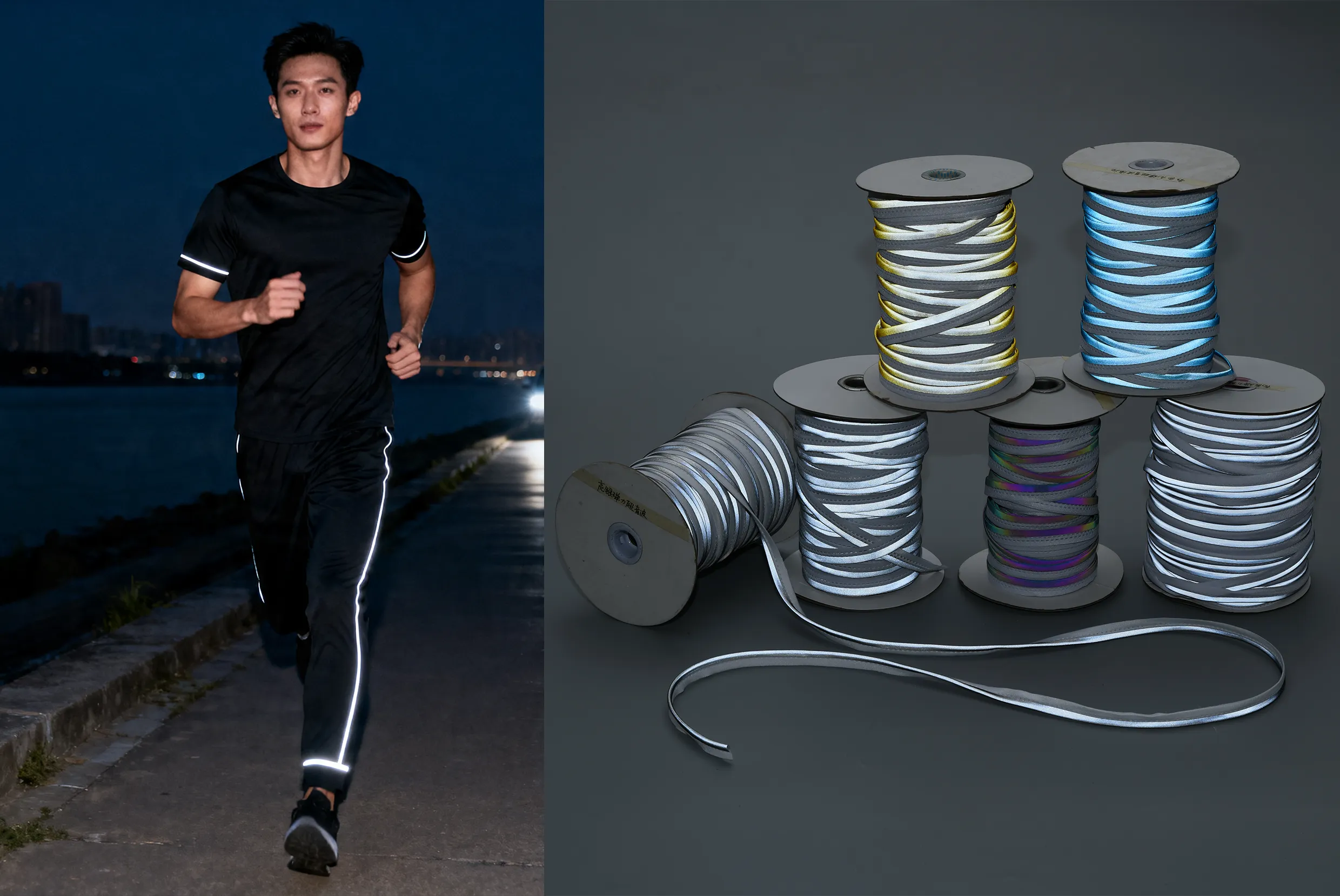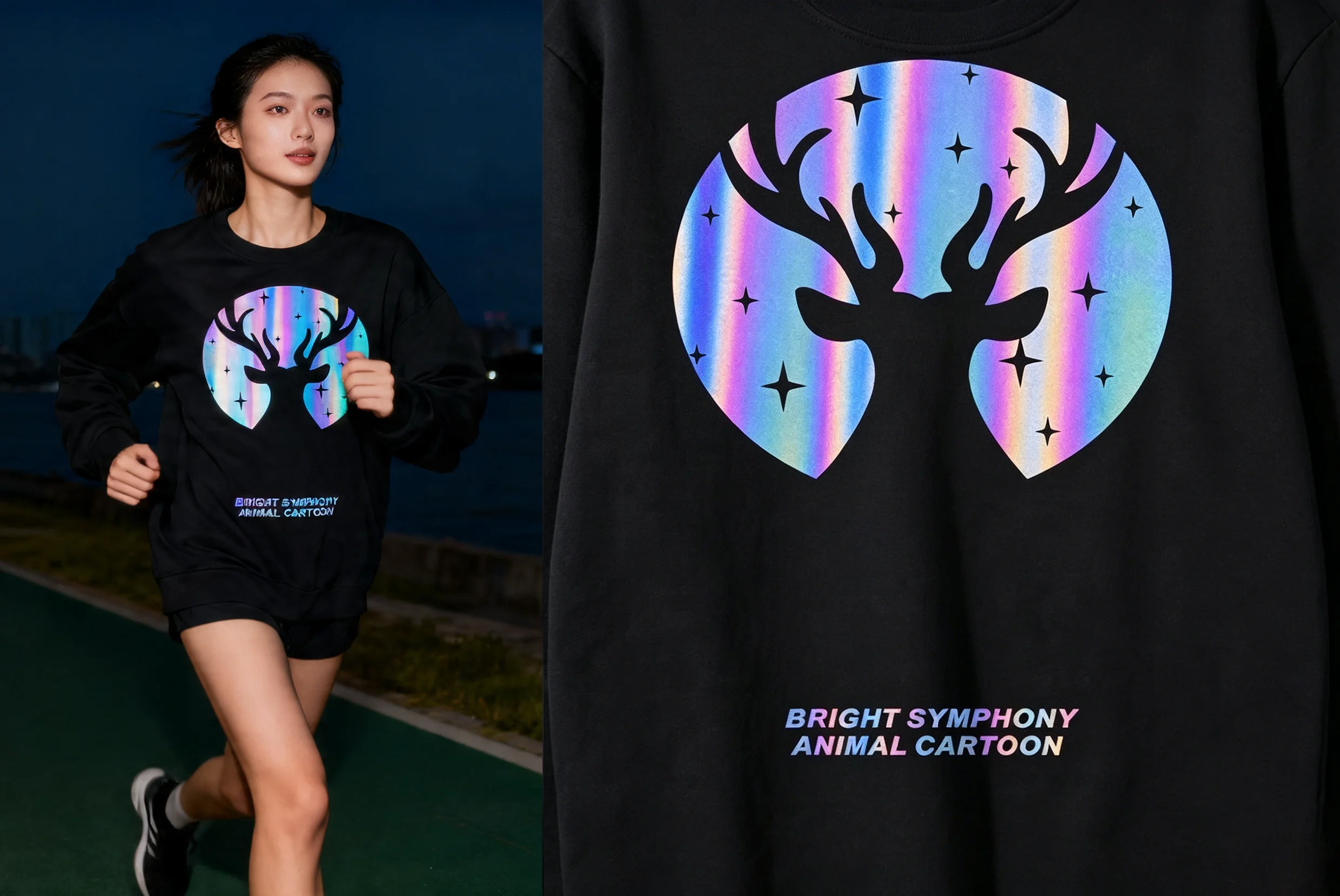
Reflective knitted thread is a functional textile material that combines reflective properties, knitability, safety, and environmental friendliness. It is widely used in safety apparel, outdoor gear, traffic warning systems, and other applications. Certification is a core requirement for entering the global market and ensuring product compliance and safety. The following sections will cover the core certification system, certification process, and industry trends.

Safety Performance (Reflective/Visibility Core Certification)
(1) EN ISO 20471 (EU High Visibility Clothing Standard)
Core Requirements: Reflective knitted yarn must meet a retroreflection coefficient ≥330 cd/lx/m², and its performance must be stable after multiple washes and aging; only fluorescent yellow, orange, and red are recognized as basic colors, covering high-risk scenarios such as road traffic, construction, and emergency rescue.
Scope of Application: EU, UK, Middle East, etc. This is the mandatory entry standard for reflective knitted yarn into the European market, replacing the old version EN 471.
Certification Points: Tests are required for reflectivity, colorfastness, washability, and weather resistance. The certification period is approximately 4-6 weeks, and certificates are issued by EU-accredited bodies (such as SGS and Intertek). (2) ANSI/ISEA 107 (US High Visibility Safety Standard)
Grading System: Divided into 3 categories—Type O (Off-road Scenarios), Type P (General Safety Operations), and Type R (Road Traffic). Type R has the highest requirements, with reflectivity ≥330 cd/lx/m².
Applicable Scope: North American markets such as the United States, Canada, and Mexico. It is the core certification for reflective knitted yarns used in occupational safety and transportation applications.
Certification Characteristics: Emphasizes all-angle visibility, requiring testing of reflectivity under different light source angles, and must comply with OSHA (Occupational Safety and Health Administration) requirements.
(3) AS/NZS 1906 (Australia and New Zealand High Visibility Standard)
Grading Requirements: 3 levels, with Class 3 (highest level) applicable to highways and extreme environments. Reflectivity ≥330 cd/lx/m², requiring rigorous testing for weather resistance, washability, and colorfastness.
Applicable Scope: Australia and New Zealand. Certification is conducted by JAS-ANZ accredited bodies and is an essential qualification in the local market. (4) CSA-Z96 (Canadian Safety Standard)
Core Indicators: Compares with ANSI 107 and EN ISO 20471, with consistent requirements for reflectivity, colorfastness, and durability, suitable for Canadian occupational safety and transportation applications.
- Environmental Safety Category (Ecological/Hazardous Substance Certification)
(1) OEKO-TEX® Standard 100 (Global Gold Standard for Eco-textiles)
Detection Scope: Covers 350+ hazardous substances, including formaldehyde, heavy metals, azo dyes, VOCs, pesticide residues, etc., divided into 4 levels, with Class 1 (Infant Grade) having the strictest requirements (for products for children ≤16 years old).
Industry Significance: Reflective knitted yarn that passes this certification proves to be non-toxic, non-radioactive, and non-irritating, suitable for use in close-fitting safety clothing and children’s protective equipment, a core screening criterion for international buyers. Latest Developments: In March 2026, Zhejiang Yike Thread Industry’s polyester reflective sewing thread passed OEKO-TEX® Class 1 certification, becoming one of the few reflective thread companies in China to obtain infant-grade eco-certification, promoting the green upgrading of the industry.
(2) GOTS (Global Organic Textile Standard)
Core Requirements: Only organic fibers (such as organic cotton and organic polyester) are recognized. The use of harmful chemicals is prohibited. It emphasizes traceability throughout the entire industrial chain. Version 8.0 was released in March 2026 and will take effect in March 2027, adding human rights and carbon footprint regulatory requirements.
Applicable Scenarios: Environmentally friendly reflective knitting thread, suitable for the high-end outdoor and sustainable brand markets.
- Special Functional Types (Flame Retardant/Weather Resistant, etc.)
UL FR Certification: For flame-retardant reflective knitting thread, compliant with NFPA 2112 and ASTM F1506 standards, used in high-temperature/open-flame scenarios such as fire fighting and mining. REACH Registration: EU chemical regulations require the registration and filing of hazardous substances in reflective knitted yarn, limiting SVHC (Substances of Very High Concern) levels. This is a fundamental compliance requirement for entering the EU market.
II. Certification Process (General Steps for Reflective Knitted Yarn)
Standard Selection: Select the corresponding safety standard (EN ISO 20471/ANSI 107, etc.) based on the target market (EU/North America/Australia/New Zealand), and simultaneously apply for OEKO-TEX® eco-certification.
Sample Preparation: Provide 5-10kg of reflective knitted yarn samples, covering different colors and specifications (e.g., 35/40 count), ensuring the samples are consistent with mass production.
Third-Party Testing: Commission authoritative institutions such as SGS, Intertek, and Heinstein to test reflectivity, hazardous substances, color fastness, wash resistance, and other indicators.
Factory Audit: Safety certification requires on-site audits of the production process and quality control system to ensure mass production complies with standards (e.g., EN ISO 20471 requires annual surveillance audits).
Certificate Acquisition: Upon successful testing and auditing, a corresponding certification will be issued, valid for 1-3 years, requiring renewal upon expiration.
Compliance Maintenance: Certificates will be updated regularly, and test reports and production records will be retained to address market inspections and customer factory audits.
III. Industry News and Trends (2025-2026)
- Domestic Enterprises Achieve Certification Breakthroughs, Seizing International Market Share
In January 2026, Dongguan Yuexiong Textile’s MONALISHA MAGIC series reflective knitting yarn passed OEKO-TEX® Standard 100 certification. It features long-lasting light storage and reflective functions, solving the pain point of traditional reflective yarn’s “failure in completely dark environments,” resulting in a 30% increase in orders from European, American, and Southeast Asian buyers.
In March 2026, Zhejiang Yike Thread Industry’s reflective sewing thread obtained OEKO-TEX® Class 1 infant-grade certification, becoming a benchmark for green manufacturing of high-end reflective yarn in China. Exports to the EU and Japanese markets increased by 25%.
- EU Regulations Upgrade, Raising Certification Thresholds
In December 2025, the EU released the DPP (Digital Product Passport) mandatory traceability regulation, listing textiles as one of the first products subject to implementation. Reflective knitted yarns must disclose full-chain data including origin, recycling rate, chemical inventory, and carbon footprint. The traditional “buying certification” model is no longer effective, forcing companies to improve their supply chain compliance systems.
The EN ISO 20471 standard has been updated, adding requirements for UV resistance and abrasion resistance tests. Reflective knitted yarns must pass 50 washes + 1000 hours of aging and still meet the reflective performance standards. Certification costs have increased by 15%, but market competitiveness has increased accordingly.
- Technological Integration, Multifunctional Reflective Yarns Become Mainstream
The industry has launched reflective + flame-retardant + antibacterial composite knitted yarns, achieving UL FR and OEKO-TEX® dual certifications. Suitable for diverse scenarios such as fire fighting, medical, and outdoor applications, global sales are projected to increase by 40% year-on-year in 2025.
Microprism reflective technology replaces traditional glass microbeads, increasing the retroreflective coefficient of reflective knitted yarn to 400+ cd/lx/m², reducing weight by 20%, and passing EN ISO 20471 Class 3 certification, making it the preferred material for high-end safety apparel.